
Kraków is one of those European cities where centuries of history are packed into a surprisingly walkable centre. Medieval streets lead to grand market squares, former royal residences overlook the Vistula River, and museums reveal the stories behind the city’s beautiful architecture.
If you’re wondering what to see and do in Kraków, there’s plenty to choose from. You can explore the historic Old Town, discover the royal treasures of Wawel Castle, wander through Kazimierz, or spend an afternoon learning about the city’s past.
But not every attraction requires the same amount of time or planning. Some are free to explore, others have timed tickets, and a few popular experiences are located outside the city.
This guide brings together the best things to do in Kraków, Poland, with practical advice on what to prioritize, which attractions to book ahead, and common mistakes to avoid.
Planning a short trip? Start with the Main Market Square, Wawel Hill and Kazimierz. These three areas offer an excellent introduction to Kraków’s history, architecture and neighbourhoods without spending your entire visit travelling between attractions.
Best Things to Do and See in Kraków
1. Explore Kraków’s Main Market Square
Best for: Architecture, sightseeing and first-time visitors
Suggested time: 30–60 minutes for the square itself
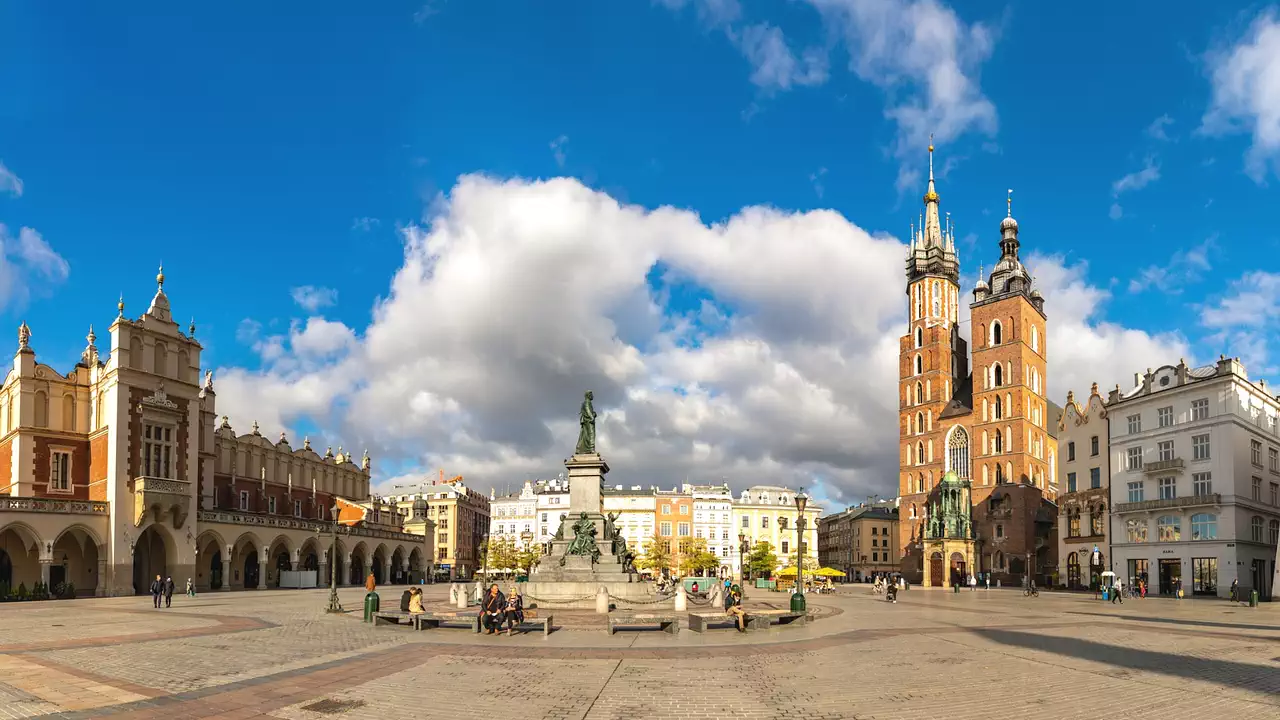
The Main Market Square, known locally as Rynek Główny, is the natural starting point for exploring Kraków.
Established as part of the city’s medieval layout, this enormous square is surrounded by historic townhouses, architectural landmarks and streets that lead into the Old Town.
Its central location makes it easy to visit several major attractions without travelling far.
The square is especially appealing if you enjoy architecture. From here, you can admire St. Mary’s Basilica, walk through the Cloth Hall, discover the remaining Town Hall Tower and explore the surrounding streets.
One of the best ways to appreciate the area is simply to take your time. Look beyond the busiest shopping streets and explore the smaller lanes leading away from the square, where you’ll find more historic buildings and quieter corners.
Good to know: Walking around the square is free. Museums, towers and other attractions nearby may require separate admission.
2. See St. Mary’s Basilica and the Historic Cloth Hall
Best for: Gothic architecture, art and historic landmarks
Suggested time: 45–90 minutes, depending on interior visits
Two of Kraków’s best-known landmarks stand directly on the Main Market Square, making them easy to explore together.
St. Mary’s Basilica is immediately recognizable by its two unequal towers. The Gothic church is famous for its richly decorated interior, blue vaulted ceiling and elaborate wooden altarpiece by Veit Stoss.
The hourly trumpet call, known as the Hejnał Mariacki, is another distinctive part of the square’s atmosphere.
Visitors interested in architecture and art can explore the designated tourist area of the Basilica. Admission arrangements are separate from access for worshippers, and sightseeing is restricted during religious services.
There is also a seasonal opportunity to climb the Bugle Tower for views over the city. However, access involves a substantial staircase, tickets are limited and the tower closes during the colder months.
Check the official St. Mary’s Basilica visitor information before planning an interior or tower visit.
A short walk away stands the Cloth Hall, or Sukiennice, which occupies the centre of the square.
Once an important trading centre, the building now contains stalls selling souvenirs and crafts. Its upper floor also houses a gallery of 19th-century Polish art operated by the National Museum in Kraków.
You can walk through the ground-floor market without buying a museum ticket.
Practical tip: You don’t need to visit every paid attraction around the square. If you’re short on time, enjoy the architecture from outside and choose one interior experience that genuinely interests you.
3. Discover Wawel Royal Castle and Wawel Hill
Best for: Polish royal history, architecture and panoramic views
Suggested time: 1–2 hours for a relaxed exterior visit; half a day or longer for several exhibitions
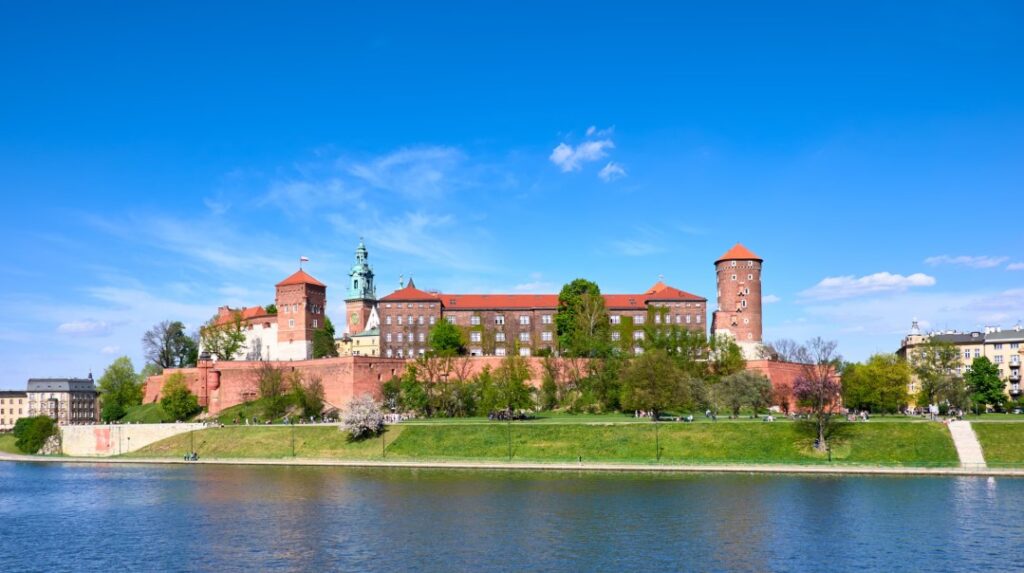
Rising above the Vistula River, Wawel Hill is one of Kraków’s most historically significant places.
For centuries, the hill was associated with Poland’s monarchs. Today, it contains Wawel Royal Castle, Wawel Cathedral, courtyards, historic buildings and several museum exhibitions.
It’s also one of the places where planning ahead can make a real difference.
What can you see at Wawel Castle?
You don’t necessarily need an exhibition ticket to appreciate Wawel Hill. Walking through the accessible outdoor grounds and admiring the castle architecture is a rewarding experience in itself.
But if you’re interested in exploring the interiors, there are several different options.
The castle’s exhibition programme includes royal state rooms, historic apartments, collections of royal treasures, armour and archaeological displays. Available routes and exhibition names can change.
Rather than booking everything, think about which part of the castle interests you most.
If you enjoy historic interiors, consider the royal rooms. If you’re more interested in ceremonial objects and Polish monarchy, the Crown Treasury may be a better choice.
Wawel Cathedral is managed separately from the Royal Castle, so its visitor arrangements and admission are not necessarily covered by a castle exhibition ticket.
The official Wawel Royal Castle website explains current exhibitions, ticket options and opening times.
Don’t miss the riverside setting. After exploring Wawel Hill, walk down towards the Vistula to see the castle from below and the famous Wawel Dragon sculpture.
Practical tip: Some Wawel exhibitions have timed entry and daily visitor limits. Decide what you want to see before purchasing tickets.
4. Wander Through Historic Kazimierz
Best for: Cultural heritage, historic streets and neighbourhood exploration
Suggested time: 1–2 hours for a general walk; longer with museum visits
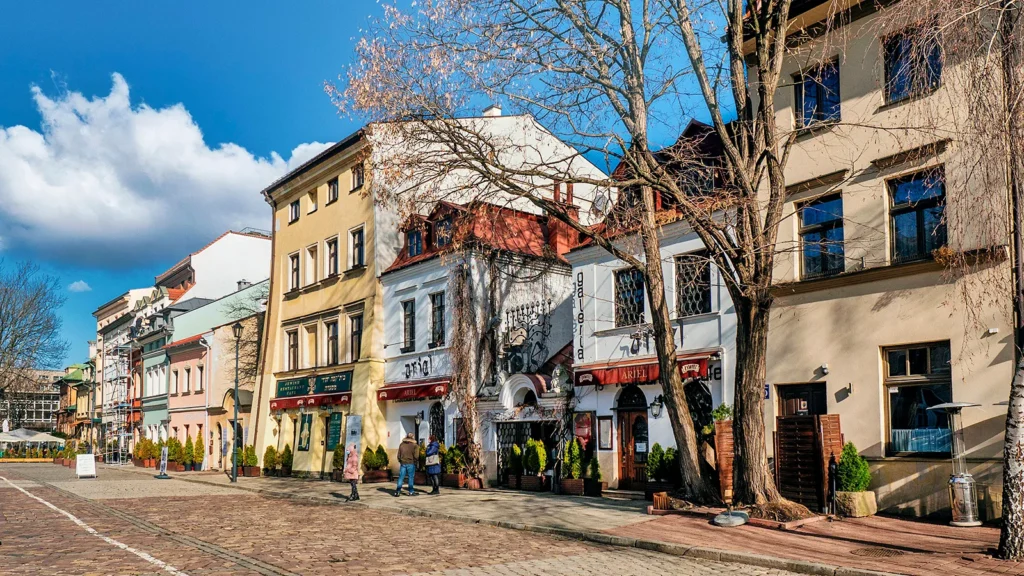
Kazimierz offers a different perspective on Kraków from the grand architecture of the Main Market Square.
Historically a separate town, Kazimierz became an important centre of Jewish life and culture. Its streets, synagogues, cemeteries and museums preserve aspects of that history, including the devastating impact of the Second World War.
Today, the district combines historic landmarks with independent shops, small galleries, cafés and local food businesses.
Szeroka Street is a useful starting point for exploring the area’s Jewish heritage. Nearby, the Old Synagogue now houses a museum dedicated to Jewish history and culture.
The Remuh Synagogue and its historic cemetery are also significant places, although visitor access and appropriate conduct should be checked in advance.
If you’d like to understand the neighbourhood beyond its architecture, consider visiting a museum or taking a historically focused walking tour.
Kazimierz is also a good place to try zapiekanka, a popular Polish toasted baguette commonly topped with mushrooms, cheese and other ingredients. Plac Nowy is particularly associated with this local street food.
Choose toppings according to your dietary preferences, and check ingredients where needed.
Practical tip: Kazimierz is best explored slowly. Give yourself time to walk between the historic sites rather than treating the neighbourhood as a single photo stop.
5. Explore Kraków’s Medieval Past at Rynek Underground
Best for: History, archaeology and interactive museum experiences
Suggested time: Around 1–2 hours
Beneath the busy Main Market Square lies one of Kraków’s most interesting museums.
Rynek Underground takes visitors below the modern city to explore archaeological discoveries connected with Kraków’s medieval trading history.
The exhibition combines original remains, historic objects and multimedia presentations to show how the city developed over the centuries.
It’s particularly interesting if you’ve already explored the square above ground and want to understand what everyday life in medieval Kraków may have looked like.
Unlike a traditional museum consisting mainly of display cabinets, Rynek Underground uses reconstructed spaces and visual storytelling to connect archaeological evidence with the city’s history.
The museum is also a useful indoor option when the weather is less suitable for walking.
Booking tip: Rynek Underground has limited admission capacity. The Museum of Kraków currently lists Tuesday as a free-admission day, but free tickets are limited and must be collected at the ticket office on the day of the visit.
Check the Museum of Kraków’s official admission information before visiting.
6. Walk Through Planty Park and the Old Town Fortifications
Best for: Scenic walks, medieval history and free sightseeing
Suggested time: 45–75 minutes for a selected walking route
Planty Park forms a green belt around Kraków’s Old Town, following much of the route where medieval fortifications once stood.
It’s a pleasant place to walk between attractions, especially when you want a break from the busy Main Market Square.
The park’s paths pass trees, monuments and historic buildings, with several opportunities to step back into the Old Town.
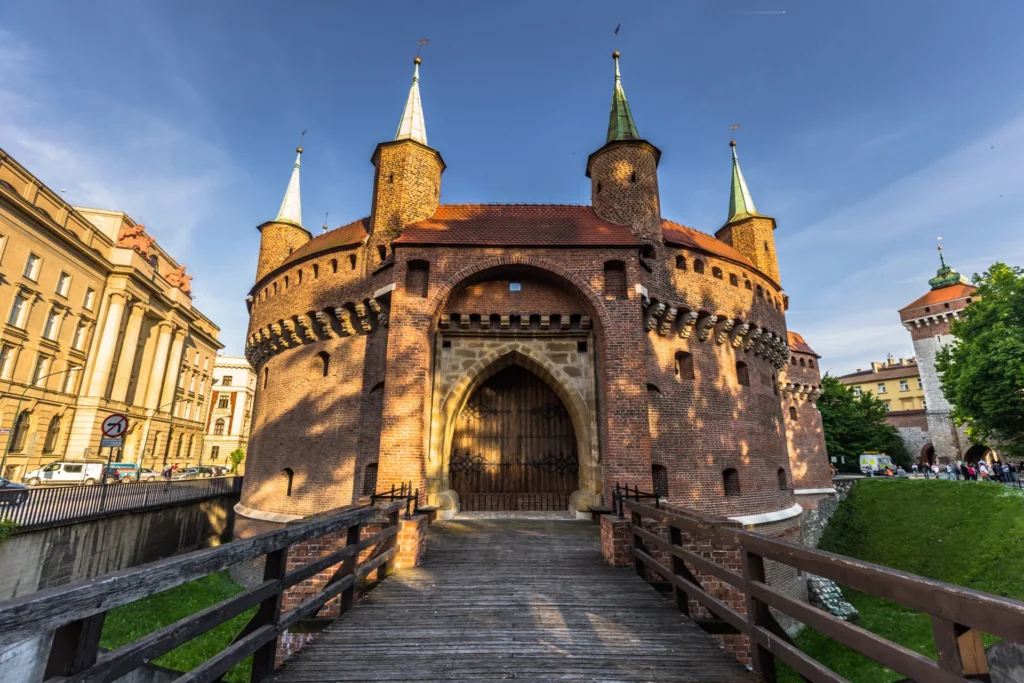
For a more direct connection to Kraków’s defensive history, head towards St. Florian’s Gate and the Barbican at the northern end of the historic centre.
St. Florian’s Gate is one of the surviving landmarks of the old city walls, while the nearby Barbican offers a striking example of medieval military architecture.
Both are worth seeing from outside, even if you don’t plan to enter the museum areas.
If you’re interested in the history of Kraków’s fortifications, check whether the Barbican and preserved city-wall sections are open for visits during your stay.
Practical tip: A good walking route begins near the Barbican, continues through St. Florian’s Gate and follows Floriańska Street towards the Main Market Square. You can then return through a section of Planty Park.
7. Visit Oskar Schindler’s Enamel Factory
Best for: Second World War history and museum exhibitions
Suggested time: Around 1.5–2 hours
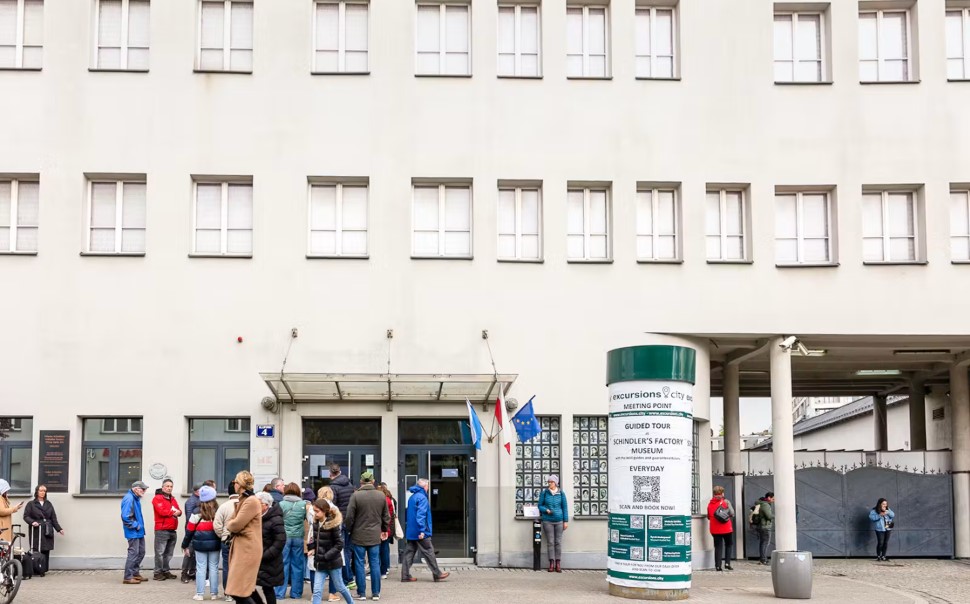
Oskar Schindler’s former enamel factory is one of Kraków’s most significant historical museums.
Despite its name, the main exhibition isn’t simply a biography of Schindler.
Instead, it explores life in Kraków during Nazi Germany’s occupation from 1939 to 1945, using photographs, historical objects, documents and reconstructed environments.
The displays examine how occupation affected the city and its inhabitants, offering a broader historical perspective on this difficult period.
It’s an important experience for visitors who want to understand Kraków beyond its medieval architecture.
The museum is located on Lipowa Street in the Zabłocie area, beyond the main Old Town sightseeing area, so allow time for the journey.
Booking tip: Admission is limited, and advance planning is sensible. The museum currently offers free admission on Mondays, but these tickets cannot be reserved in advance and availability is restricted.
Check the official Museum of Kraków website for the latest admission rules.
8. Discover Podgórze and Ghetto Heroes Square
Best for: Historical understanding, remembrance and meaningful sightseeing
Suggested time: Around 45–90 minutes, excluding longer museum visits
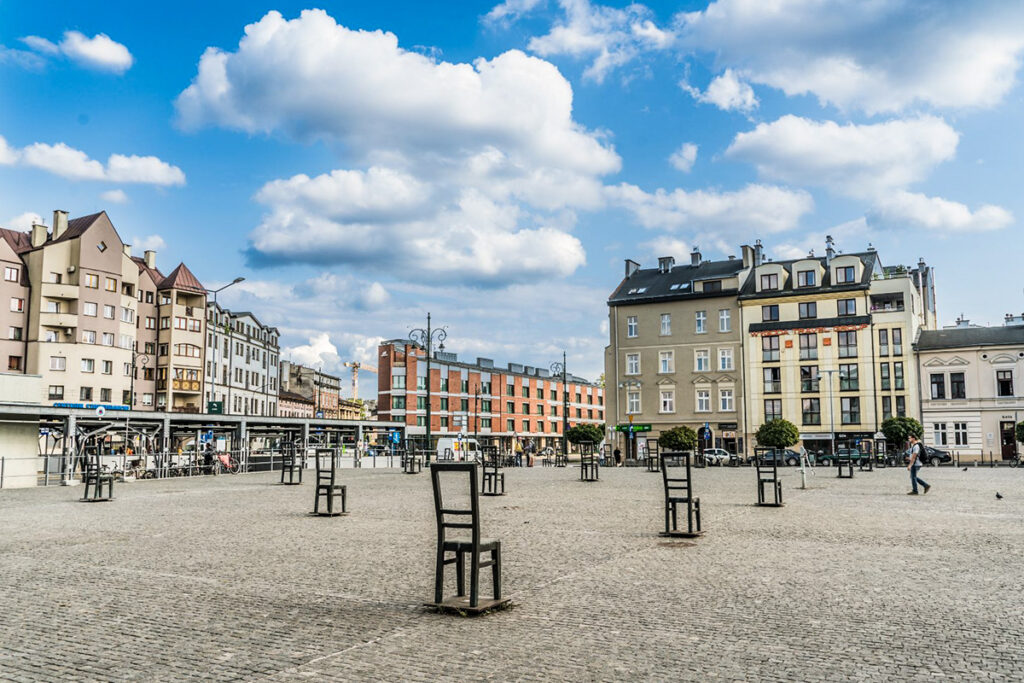
Across the Vistula from Kazimierz lies Podgórze, an area with an important and difficult place in Kraków’s wartime history.
During the Nazi occupation, a Jewish ghetto was established in this part of the city, and thousands of residents experienced forced confinement, persecution and deportation.
Today, Ghetto Heroes Square, or Plac Bohaterów Getta, contains the Empty Chairs Memorial, commemorating the people who suffered and were lost.
Nearby is the Eagle Pharmacy, associated with Tadeusz Pankiewicz, whose pharmacy operated within the ghetto and provided assistance to its residents.
The former pharmacy now houses a museum exploring this history.
Podgórze should be visited with the same care and respect given to other places associated with persecution and remembrance.
If you’re also visiting Schindler’s Factory, these locations can be considered together geographically, while allowing enough time to engage thoughtfully with their historical significance.
Practical tip: Check the official Museum of Kraków website for Eagle Pharmacy’s current opening days and ticket arrangements before visiting.
9. See European Masterpieces at the Czartoryski Museum
Best for: Fine art and historical collections
Suggested time: Around 1.5–2 hours
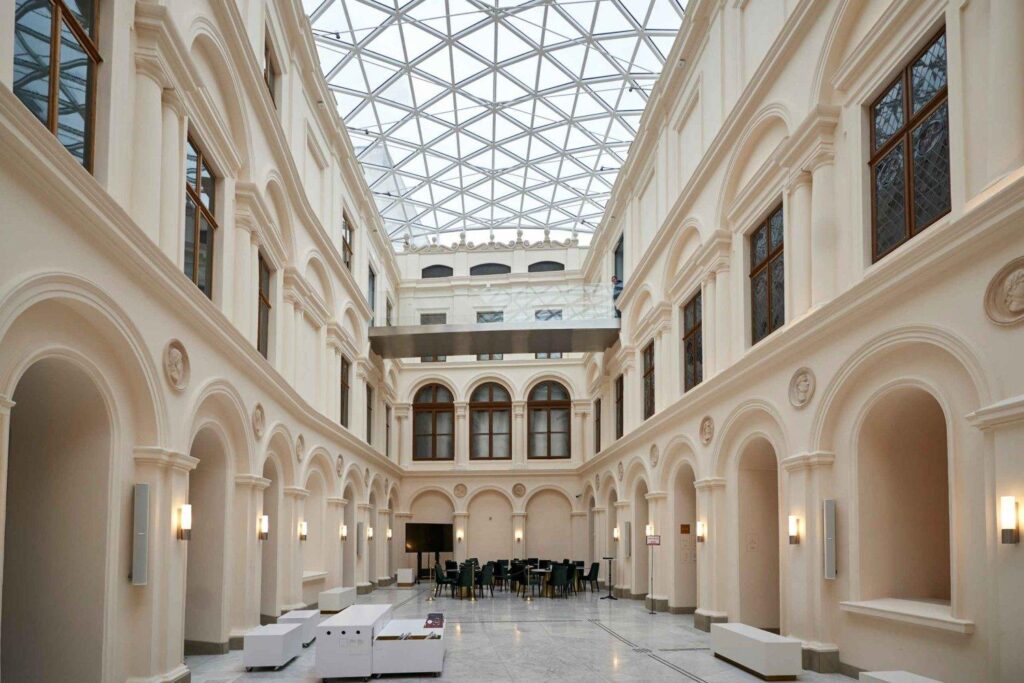
If you enjoy art museums, the Czartoryski Museum is an excellent option to consider in Kraków.
Part of the National Museum in Kraków, it houses an important collection of European paintings, historical objects and decorative arts.
One of its best-known works is Leonardo da Vinci’s Lady with an Ermine. The collection also includes Rembrandt’s Landscape with the Good Samaritan.
The museum itself is housed in an impressive historic setting, so visitors can appreciate both the collection and the surrounding architecture.
It’s a particularly worthwhile choice for travelers interested in Renaissance art and European history.
Which museum should you choose? If you’re more interested in Kraków’s medieval streets and archaeology, prioritize Rynek Underground. If paintings and historic art collections appeal to you more, choose the Czartoryski Museum.
You don’t need to visit both unless your interests and schedule justify it.
See the official Czartoryski Museum information for current opening hours, exhibitions and accessibility facilities.
10. Walk Along the Vistula River and See the Wawel Dragon
Best for: Riverside scenery, photography and relaxing walks
Suggested time: 30–60 minutes
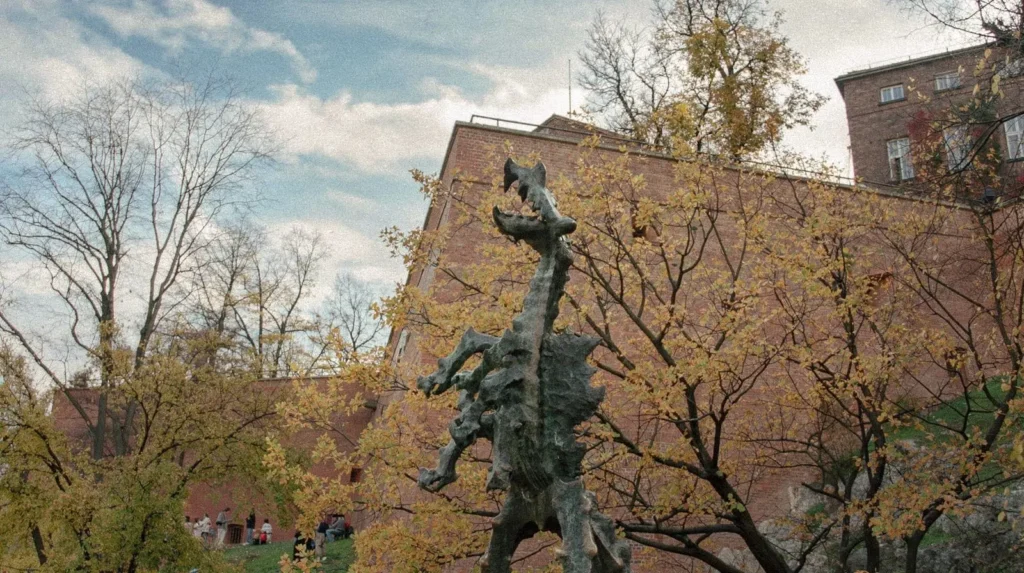
After spending time among Kraków’s museums and historic streets, the Vistula River offers a change of pace.
The riverside paths provide attractive views towards Wawel Hill and opportunities to appreciate the scale of the castle from below.
Near the foot of the hill stands the Wawel Dragon sculpture, inspired by one of Kraków’s best-known legends.
The sculpture is famous for periodically releasing a burst of fire, making it an entertaining stop for visitors exploring the riverside.
Those interested in the legend can also look into Dragon’s Den, a cave route connected with Wawel Hill. This is a seasonal attraction with separate admission and numerous stairs.
If you prefer an easy outdoor experience, simply enjoy the riverside path and castle views.
Practical tip: This walk fits naturally after a Wawel Castle visit, so there’s no need to make a separate journey across the city.
Worthwhile Day Trips from Kraków
Kraków offers enough attractions to fill several days, but two historically significant excursions are frequently included in longer visits.
Both require more planning than the central city sights.
Wieliczka Salt Mine
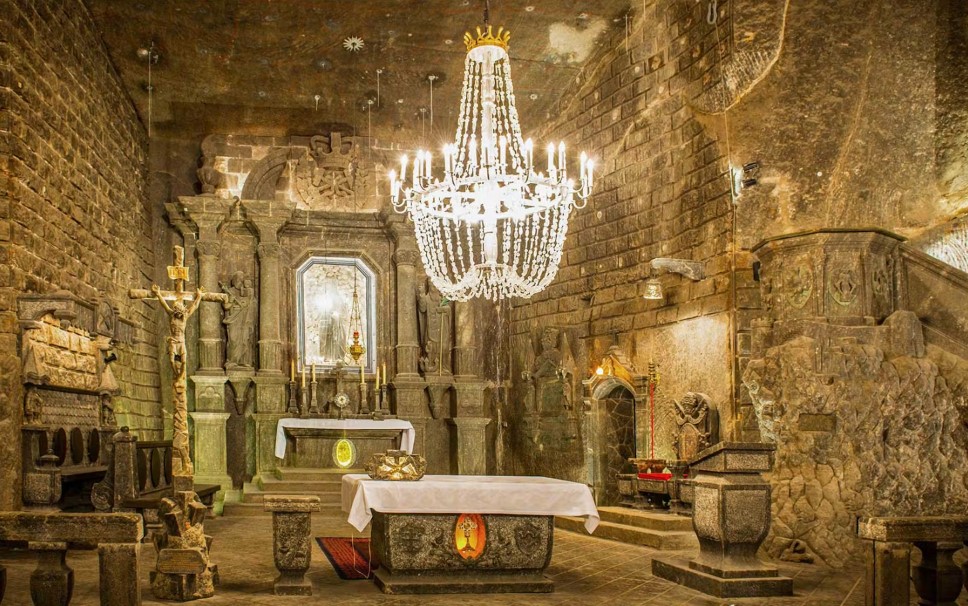
The Wieliczka Salt Mine is an extraordinary underground attraction located outside central Kraków.
Its tourist route passes through tunnels and chambers carved deep beneath the surface, with salt sculptures, underground lakes and displays explaining the mine’s history.
One of the most remarkable spaces is St. Kinga’s Chapel, where elaborate decorative details and sculptures have been carved from salt.
The standard tourist route takes approximately 2–3 hours and includes around 800 stairs, with roughly 380 at the beginning. Visitors return to the surface by lift.
This is an important consideration for anyone with mobility difficulties. Special accessible visits may be available by advance arrangement.
Guided visits are required, and English-language places can be limited at popular times.
Check the official Wieliczka Salt Mine website for current tour times, booking options and accessibility arrangements.
Allow additional time for travel between Kraków and the mine.
Auschwitz-Birkenau Memorial and Museum
The Auschwitz-Birkenau Memorial and Museum preserves the former Nazi German concentration and extermination camp near Oświęcim.
Visiting is an opportunity to learn about the Holocaust, honour its victims and confront the history of the persecution and mass murder carried out there.
It is not a conventional sightseeing attraction, and the experience can be emotionally difficult.
The Memorial consists of two principal sites, Auschwitz I and Auschwitz II-Birkenau, both of which form part of the visitor experience.
A standard guided visit takes approximately 3.5 hours, excluding transport from Kraków and additional time required for arrival procedures.
Personalized entry passes must be reserved in advance through the official reservation system. There are different arrangements for guided and individual visits.
Read the Auschwitz-Birkenau Memorial’s official visitor guidance before arranging your visit.
Planning recommendation: Although some operators offer combined Auschwitz-Birkenau and Wieliczka tours, consider visiting on separate days. A visit to the Memorial deserves time and reflection without the pressure of rushing to another attraction.
6 Mistakes to Avoid When Visiting Kraków
Knowing what to see in Kraków is only half of planning a successful trip. A few avoidable mistakes can also affect your budget, sightseeing schedule and overall experience.
1. Leaving popular attraction bookings until the last minute
Some experiences, particularly Auschwitz-Birkenau, Wieliczka Salt Mine and selected Wawel exhibitions, use timed admission or have limited capacity.
Waiting until you arrive may leave you with fewer choices, especially during busy travel periods.
Check the official booking arrangements once your travel dates are confirmed, and prioritize any attraction that is essential to your trip.
2. Assuming one Wawel Castle ticket includes everything
Wawel Hill contains multiple attractions with different admission arrangements.
The outdoor grounds, castle exhibitions, cathedral and seasonal routes are not necessarily covered by one standard ticket.
Before purchasing admission, decide which exhibitions genuinely interest you. This helps avoid unnecessary spending and an overcrowded schedule.
3. Accepting an unfavorable currency conversion
Poland uses the Polish złoty (PLN), despite being a member of the European Union.
When paying by card or withdrawing cash, you may be offered the option to convert the amount into your home currency.
This service, known as dynamic currency conversion, may use an unfavorable exchange rate.
Compare the terms and, in many cases, choosing to pay in PLN allows your card provider to handle conversion. Check your own bank’s international fees as well.
Likewise, check withdrawal charges before confirming an ATM transaction.
4. Eating every meal directly on Main Market Square
Dining beside Kraków’s Main Market Square can be enjoyable, particularly if you’re paying for the setting and the views.
However, the most central restaurants aren’t necessarily the best value.
Explore nearby side streets and Kazimierz, where you’ll find additional cafés, bakeries and local food options.
Traditional Polish foods worth exploring include suitable varieties of pierogi, mushroom-and-cheese zapiekanka, and sweet pastries.
Ingredients vary, so check fillings, sauces and preparation when choosing food.
You don’t have to avoid the square’s restaurants completely. Just compare your options instead of choosing every meal based on location alone.
5. Missing free museum admission opportunities
Some of Kraków’s museums provide free admission on particular days.
For example, the Museum of Kraków currently lists free entry on Tuesdays for Rynek Underground and Mondays for Schindler’s Factory.
However, free admission does not always mean unrestricted entry. Ticket numbers may be limited, free tickets may need to be collected in person, and some museums operate shorter hours on these days.
Check each museum’s official schedule before arranging your itinerary around free admission.
6. Renting a car just to explore the Old Town
Kraków’s historic centre is relatively compact, and many of its best-known attractions can be explored on foot.
Parts of the Old Town and Kazimierz also have restricted vehicle access.
For most central sightseeing, walking and public transport are more practical than renting a car, finding parking and navigating traffic restrictions.
A rental car may make sense if you’re travelling further across Poland, but it’s usually unnecessary for a short Kraków city break.
Planning Your Kraków Visit
How many days do you need in Kraków?
One day: Concentrate on the Old Town, Main Market Square, St. Mary’s Basilica, Wawel Hill and a short walk through Kazimierz. Choose only one major paid interior if time is limited.
Two days: Add museums such as Rynek Underground or Schindler’s Factory, and spend more time exploring Kazimierz and Podgórze.
Three days or longer: Explore the city at a slower pace and consider one of the excursions outside Kraków.
These are suggested priorities rather than fixed itineraries. Your schedule should depend on museum opening days, ticket availability and personal interests.
Is Kraków easy to explore on foot?
Kraków is an excellent city for walking, particularly around the Old Town.
The Main Market Square, Cloth Hall, St. Mary’s Basilica, Planty Park and several historic landmarks are close together.
Wawel Hill and Kazimierz are also practical extensions of a central sightseeing walk for many visitors.
For attractions farther away, including Schindler’s Factory, public transport may be more convenient.
Wear comfortable shoes: historic streets can have cobbled surfaces, and some attractions involve stairs or extended walking.
What should first-time visitors prioritize?
If it’s your first trip to Kraków and your sightseeing time is limited, I would prioritize three areas.
Start with Main Market Square and the Old Town for the city’s medieval architecture and historic atmosphere.
Continue to Wawel Hill to discover Kraków’s royal history and enjoy views towards the Vistula.
Then explore Kazimierz for its distinctive cultural heritage, historic streets and neighbourhood character.
Together, these provide a varied introduction to Kraków without requiring a long list of tickets or complicated transport arrangements.
Add museums and day trips based on your interests rather than trying to fit everything into one visit.
Final Tips for Exploring Kraków
The best things to do in Kraków aren’t limited to ticking famous attractions off a list.
The city rewards a balanced approach: explore its historic squares, choose museums that interest you, make time for its different neighbourhoods and leave space for an unhurried walk.
A little advance planning can also make a substantial difference. Check official admission information, allow enough time for major attractions and group nearby places together whenever possible.
Whether you’re spending a weekend in Kraków or staying longer, focus on the experiences that matter most to you. You’ll get far more from the city than by rushing between every attraction on a checklist.